Auto insurance is one of the largest ongoing expenses associated with vehicle ownership. While Sam's Club is best known for bulk shopping, fuel savings, and member-exclusive deals, many drivers are surprised to learn that their membership may also help them reduce certain transportation-related costs.
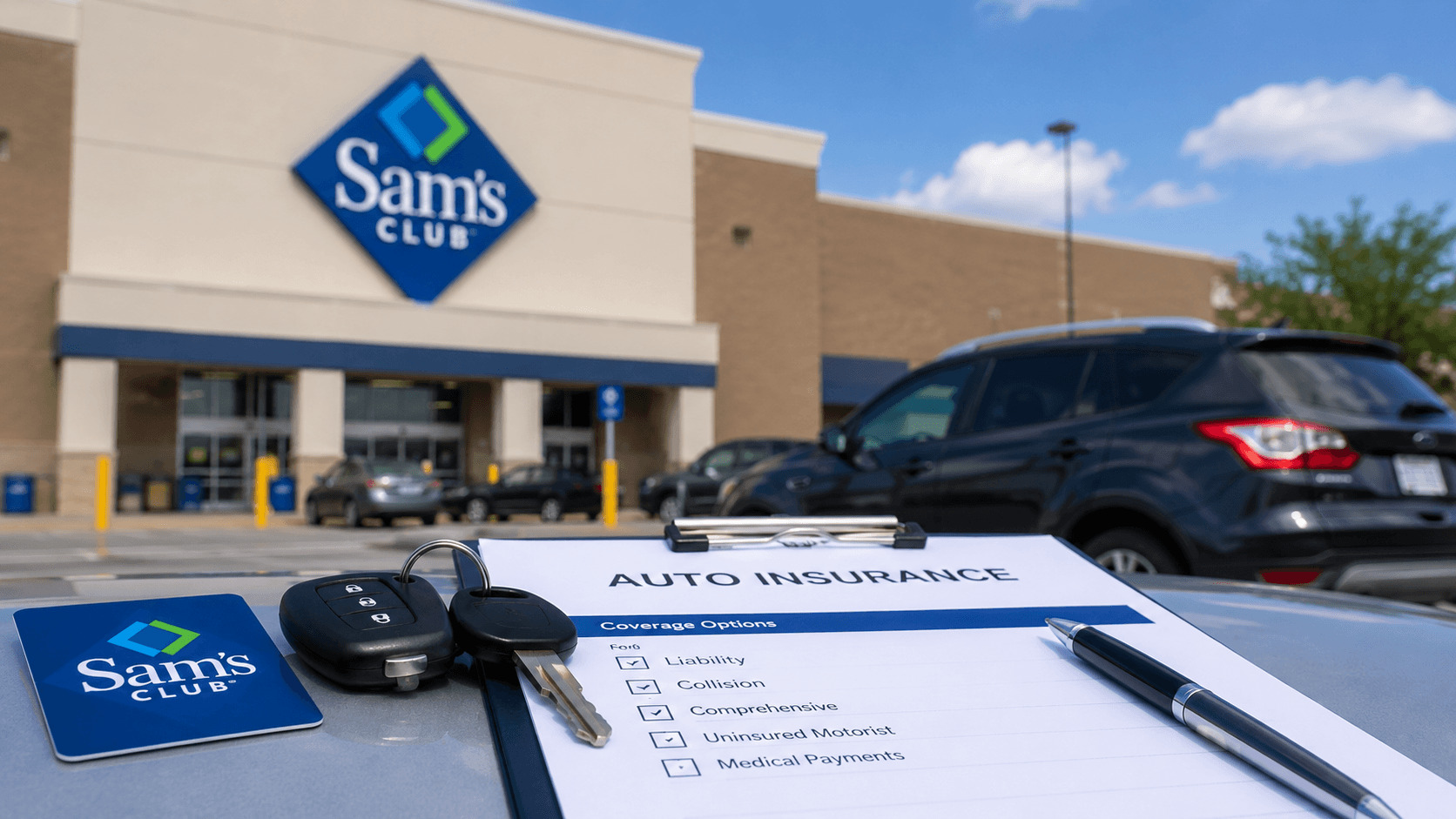
Although Sam's Club does not sell auto insurance directly, members may have access to insurance-related discounts, vehicle purchasing benefits, and other automotive perks that can help lower the overall cost of owning and operating a vehicle.
This guide explains what Sam's Club members should know about auto insurance options, how membership may affect insurance costs, and what additional vehicle-related benefits may be worth considering.
The short answer is no.
Sam's Club does not underwrite, sell, or administer auto insurance policies. If you need car insurance, you will still need to purchase coverage through a licensed insurance company operating in your state.
This distinction is important because some consumers mistakenly assume that Sam's Club operates an insurance program similar to certain membership organizations or professional associations. In reality, Sam's Club primarily focuses on retail membership benefits rather than serving as an insurance provider.
However, that does not mean membership is irrelevant when shopping for coverage.
Many insurance companies offer what are commonly known as affinity discounts, group discounts, or membership-based discounts. Depending on the insurer and state regulations, being a member of an organization such as Sam's Club may qualify you for additional savings.
Because insurance pricing rules vary by state and carrier, availability is not guaranteed, but it is often worth asking insurers whether membership-based discounts are available.
Insurance providers frequently use group affiliations to attract lower-risk customers and increase retention.
Members of warehouse clubs, professional associations, alumni groups, and certain employers are sometimes eligible for special pricing programs. These discounts are generally not provided because of the membership itself, but because insurers view members of established organizations as a desirable customer segment.
For Sam's Club members, this means that some insurers may offer:
The amount of savings can vary significantly. In some cases, the discount may be modest, while in others it can be more meaningful when combined with other available discounts.
The best strategy is the same one recommended for any driver: compare multiple quotes.
Rather than focusing exclusively on one insurance company, Sam's Club members should obtain quotes from several major insurers and ask whether any membership-related discounts are available.
When requesting quotes, consider asking:
Many consumers focus solely on the final premium, but comparing coverage limits, deductibles, customer service ratings, and claims handling can be equally important.
The cheapest policy is not always the best value if coverage gaps create financial risk after an accident.
Regardless of where you shop for insurance, understanding the major coverage categories can help you make informed decisions.
Liability insurance pays for injuries or property damage you cause to others.
Most states require minimum liability limits, but minimum coverage often provides limited financial protection. Many drivers choose higher limits to better protect their assets.
Collision insurance helps pay for repairs to your vehicle after an accident involving another vehicle or object.
This coverage is particularly valuable for newer vehicles or vehicles with significant market value.
Comprehensive insurance covers non-collision losses such as:
Drivers who park outdoors or live in areas prone to severe weather often find comprehensive coverage especially useful.
Not every driver on the road carries sufficient insurance.
This coverage may help pay for injuries and damages if another driver lacks adequate insurance coverage.
Depending on your state, these coverages may help pay medical expenses resulting from an accident.
Understanding how these protections work can help prevent unexpected out-of-pocket expenses.
One automotive benefit that often receives less attention is the Sam's Club Auto Buying Program.
Powered by TrueCar, the program allows members to research vehicles, compare pricing, and connect with participating dealerships.
While this is not an insurance product, it may indirectly influence insurance costs in several ways.
First, purchasing a vehicle at a competitive price can lower the amount financed, potentially reducing financial exposure.
Second, the program may provide access to certain member benefits associated with vehicle purchases through participating dealers.
Third, the ability to compare vehicle pricing can help consumers make more informed decisions before committing to a purchase.
Insurance costs are often heavily influenced by the vehicle itself, so choosing a model with lower repair costs, better safety ratings, and lower theft rates can significantly reduce premiums over time.
Many drivers underestimate how much their vehicle selection impacts insurance premiums.
Factors insurers commonly consider include:
More expensive vehicles generally cost more to insure because repairs and replacements are more costly.
Certain vehicles require specialized parts or labor, increasing claim costs.
Advanced safety systems can sometimes reduce accident frequency and severity.
Examples include:
Vehicles that are frequently stolen may carry higher insurance premiums.
Sports cars and high-performance vehicles often cost more to insure than standard sedans or family SUVs.
For many households, selecting a practical vehicle can save hundreds of dollars annually in insurance premiums.
Even when insurance discounts are limited, Sam's Club membership can help reduce other transportation costs.
Sam's Club fuel stations frequently offer gasoline prices below local averages.
For drivers with long commutes, these savings can add up throughout the year.
Proper tire maintenance can improve safety and reduce accident risk.
Sam's Club's Tire and Battery Center offers services such as:
Maintaining tires properly can improve vehicle performance and potentially help avoid costly incidents.
Battery testing and replacement services can help drivers avoid unexpected breakdowns.
Preventive maintenance may not directly lower insurance premiums, but it can reduce the likelihood of roadside emergencies and expensive repairs.
For most drivers, membership discounts are only one piece of the puzzle.
Some of the most significant savings opportunities come from combining multiple discounts.
Many insurers offer substantial discounts when customers purchase:
Drivers with clean records often qualify for lower premiums.
Driving fewer miles annually may reduce risk and result in lower rates.
Many insurers offer smartphone or device-based programs that monitor driving habits.
Safe driving behaviors may lead to additional discounts.
Completing an approved driving course may qualify drivers for savings in certain states.
Combining several discounts often produces larger savings than relying on any single membership benefit.
For most people, probably not.
A Sam's Club membership can be valuable for many reasons, including shopping savings, fuel discounts, and automotive services. However, purchasing a membership solely for potential insurance discounts may not make financial sense.
Insurance discounts vary widely based on:
Some members may save enough to offset their membership cost, while others may see little or no insurance-related benefit.
The strongest value typically comes when insurance savings are combined with other membership perks such as discounted fuel, tire services, and shopping savings.
Sam's Club does not directly provide auto insurance, but membership can still play a role in reducing overall vehicle ownership costs. Some insurance carriers may offer membership-based discounts, and members can also take advantage of fuel savings, automotive services, and vehicle purchasing resources.
The most effective strategy remains comparing multiple insurance quotes, reviewing coverage carefully, and taking advantage of all available discounts. A Sam's Club membership should be viewed as a potential bonus rather than a primary source of insurance savings.
For drivers who already use Sam's Club regularly, asking insurers about membership-related discounts is a simple step that may help lower premiums. Combined with responsible driving habits, smart vehicle choices, and regular policy reviews, these savings can add up over time.