Your last online order triggered over 200 AI decisions before it even left the warehouse. Not a single human was involved in most of them.
When you place an order, the visible part ends immediately — confirmation email, tracking number, done. Behind that, a chain of AI-driven decisions fires off within seconds.
The system has to answer several questions at once:
Which warehouse has the item closest to you?
Is stock about to run low, and should it pull from a backup location?
Which carrier can deliver fastest at the lowest cost?
What route should the package take given current traffic and weather?
No person is making these calls. Algorithms evaluate hundreds of variables simultaneously, and the whole process finishes before you've closed the browser tab. Most people think the interesting part is the delivery truck. It's not. The interesting part happened in the first three seconds after you clicked "buy."
Here's something that might surprise you: some products are shipped to a warehouse near you before you even decide to buy them. AI demand forecasting systems analyze regional buying patterns, seasonal shifts, and trend signals well enough to pre-position inventory where it's likely to be needed next.
Traditional planning used averages — order the same amount monthly, keep a fixed safety buffer. That works when demand is predictable. It collapses during a heat wave that triples ice cream sales, a viral post that sends everyone hunting the same product, or a port delay that cuts supply for three weeks.
Modern systems adapt in real time. They notice a product selling faster than expected in one region and reroute stock before the shelf empties. Safety stock levels adjust dynamically instead of sitting on a number someone calculated six months ago. Retailers and suppliers increasingly compare AI demand forecasting tools and smart inventory management platforms to find systems that handle these swings without constant human intervention.

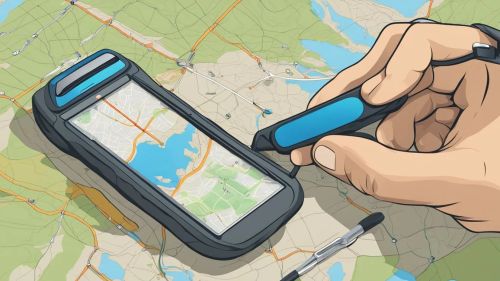
Route planning used to mean a dispatcher looking at a map and picking the most obvious road. Now an AI system recalculates delivery routes continuously — factoring in live traffic, weather changes, driver availability, vehicle capacity, and delivery time windows, all at once.
A highway closes unexpectedly? The system reroutes within minutes. A delivery van finishes its stops early? Nearby packages get reassigned to fill the gap instantly. This kind of real-time optimization was impossible five years ago because the math was too complex to run fast enough. Modern AI logistics platforms handle it as routine.
The result shows up in your tracking updates: fewer delays, tighter windows, and that increasingly common "delivered earlier than expected" notification. Companies running these systems see measurably lower fuel costs and better on-time rates, which is why AI-powered route optimization and fleet management software have become standard investments across the logistics industry.
The warehouse your package ships from probably looks nothing like what you picture. Forget dusty shelves and forklifts. Many large fulfillment centers now operate more like a high-speed chess game — AI directing every move, humans and robots working in coordinated patterns across a space the size of several football fields.
Here's what AI handles inside these facilities:
Product placement — high-frequency items near packing stations, frequently co-purchased products stored side by side
Picking paths — the system calculates the fastest route through the warehouse for each order
Robotic coordination — in some facilities, autonomous robots bring entire shelves to workers instead of workers walking to find items
Quality control — computer vision scans each package for damage or incorrect items before it ships
Staffing — predicted order volume determines how many people work each shift, avoiding overstaffing on slow days and chaos during surges
The combination of AI warehouse automation and robotics fulfillment systems has turned these places into something closer to a choreographed factory floor than a storage room.
Supply chains break. Ports close. Storms ground flights. A supplier misses a deadline. The question isn't whether disruptions happen — it's how fast the system recovers.
Every disruption teaches the AI something. A delayed shipment from one supplier triggers the model to lower that supplier's reliability score going forward. A storm that disrupted deliveries in one region gets factored into future planning the next time similar weather patterns appear. The system doesn't just recover — it gets harder to surprise.
Companies invest in predictive supply chain analytics and AI risk management platforms specifically for this reason. The goal isn't eliminating disruptions — that's impossible. The goal is shrinking the gap between "something went wrong" and "here's the adjusted plan" from days down to hours.
Why do some packages arrive so much faster now than five years ago?
AI-powered warehouse management, real-time route optimization, and predictive inventory placement all contribute. Items are often pre-positioned in warehouses near you based on demand patterns before you even order them.
Can AI actually predict what products will sell?
With reasonable accuracy, yes. AI demand forecasting models analyze purchase history, seasonal patterns, regional trends, and even external signals like weather. They're not perfect, but they outperform traditional methods based on historical averages by a wide margin.
Do small businesses use supply chain AI too?
Increasingly, yes. Cloud-based supply chain management platforms and AI inventory tools now offer affordable tiers for smaller operations. A business doesn't need warehouse robots — subscription logistics software can optimize ordering, routing, and stock levels at a fraction of enterprise costs.
What happens to supply chains during major disruptions like natural disasters?
AI systems flag the disruption, estimate impact on affected routes and suppliers, and generate alternative plans automatically. Recovery still takes time, but AI-driven systems adjust days faster than teams relying on manual planning and spreadsheets.